
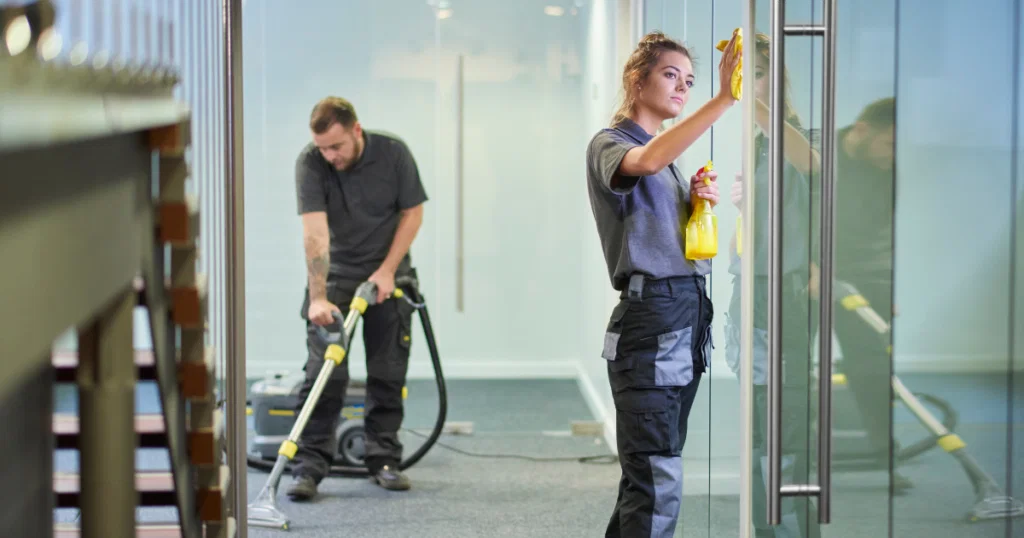
Scheduling and routing for commercial cleaning
Challenge
The company’s founder and CEO, Jim, was a well-known voice in the industry, a regular speaker at industry conferences on how commercial cleaning operations could run. He saw an opportunity to bring real structure and automation to a corner of the business that had stayed manual industry-wide.
Gavant Solution
The early version proved out the concept, automating scheduling and estimating behavior that had never been systematized before. As it became clear what the platform could do, both for internal operations and for how the company sold to prospective customers, Jim wanted to push further and add more advanced functionality. By then, the original technology stack was aging and its core framework was being phased out. The new functionality he wanted would have required significant rework of the existing system regardless, and building that rework on a sunsetting foundation made little sense for a system that had already proven itself mission-critical. Gavant rebuilt the platform on a modern stack built to support it for the long term.
Impact
Job cards alone cut training time for front-line cleaners by 40%, a meaningful number in an industry with this much turnover. The time needed to workload and estimate a space dropped by 50%, with far fewer of the inconsistencies that used to come with doing it by hand. Visibility improved across the organization too, with operations managers weighing in earlier in the process and automated approvals giving senior leadership real oversight and accountability.
The system also became something the company could point to competitively. “I am very pleased with the application we have currently, and feel very confident that a good push in the marketplace will bring dividends,” Jim said. Gavant took on ongoing support for the platform following the rebuild.